
Turn off your stopcock immediately, switch off the electricity supply to the affected room, then drain the remaining water from your taps before you do anything else. Those three steps, done in that order, stop a burst pipe turning a bad afternoon into a five figure repair bill. Everything after that is about limiting the mess and protecting yourself financially until your plumber gets there.
Here is exactly what to do, in the order it matters.
Step 1: Find and Shut Off Your Stopcock
Your stopcock (sometimes called the mains shutoff valve) is usually under the kitchen sink, in a downstairs cupboard, or near where the water main enters the house. Turn it clockwise until it stops. This cuts off the supply feeding the burst, so even if water is still spraying, it will slow to a trickle within a minute or two.
If you genuinely cannot find it or it will not budge, do not force it. Call your water supplier’s emergency line, they can often talk you through it or shut off supply at the boundary box outside your property.
Step 2: Cut the Electricity to the Area
Water and electrics do not mix. If the leak is anywhere near sockets, light fittings, or a consumer unit, switch off the circuit at the fuse board rather than risk it. Never touch a switch with wet hands, and if water is actively dripping from a ceiling near a light fitting, treat that room as off limits until a professional has checked it.
Step 3: Drain the System
Once the stopcock is off, open every tap in the house, starting with the ones on the highest floor and working down. Flush the toilets a couple of times too. This clears the remaining water sitting in your pipework, which relieves pressure and stops it finding its way out through the burst while you wait.
If you have a combi boiler or hot water cylinder, it is worth switching that off as well until the plumber has assessed things.
Step 4: Contain the Water
With the flow under control, focus on the water that has already escaped.
- Mop up standing water with towels, old bedding, or a wet and dry vacuum if you have one.
- Position buckets or bowls directly under any drips, especially from ceilings.
- Move rugs, furniture, and electronics well away from the wet area.
- Prop up soaked carpet edges so air can get underneath.
Keep checking buckets every ten to fifteen minutes. A steady drip fills a bucket faster than most people expect.
Step 5: Try a Temporary Patch (Only if It’s Safe)
If the burst is small and easy to reach, a rubber pipe repair clamp, a section of thick rubber sheeting held on with a jubilee clip, or epoxy putty moulded over a pinhole can slow things down further. Keep in mind these are stopgaps, not fixes. They won’t hold under full mains pressure once the stopcock goes back on, so don’t rely on them and don’t delay calling a plumber because you’ve patched it.
Skip this step entirely if the pipe is buried in a wall, hidden behind panelling, or anywhere near electrics.
Step 6: Document Everything for Your Insurer
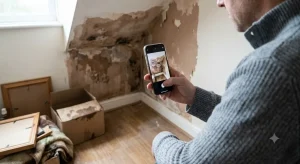
Before you start clearing up properly, take clear photos and a short video of the damage, the source of the leak, and anything affected (flooring, ceilings, furniture, belongings). Most UK home insurance policies cover burst pipe damage under buildings or contents cover, and some also cover trace and access costs (finding and reaching the source of a hidden leak). Good documentation speeds up the claim and avoids disputes later.
Hold off on binning anything damaged until your insurer confirms you don’t need it as evidence.
Step 7: Watch for Sewage or Structural Risk
If the water smells foul, looks discoloured, or is coming from a soil pipe rather than a fresh water line, stay well clear and treat it as contaminated. Similarly, if a ceiling is bulging, sagging, or has started to crack under the weight of trapped water, leave the room and wait for your plumber rather than trying to release the water yourself.
While You’re Waiting for the Plumber
- Keep your stopcock location handy and shared with anyone else in the house, so this happens faster next time.
- Note down the time the pipe burst, roughly where it is, and what you’ve already done. Passing this on saves your plumber time on arrival.
- Keep pets and children away from the affected room.
- If you’re at all unsure about anything above, particularly around electrics or a ceiling that looks unstable, wait for a professional rather than improvising.
Preventing the Next One
A burst pipe is rarely bad luck alone. Cold snaps, ageing pipework, and poorly insulated lofts or outbuildings are the usual culprits. A few habits cut the risk significantly:
- Insulate exposed pipes in lofts, garages, and under floors before winter sets in.
- Keep your heating on a low, constant setting during cold spells, even if you’re away from home.
- Get pipework checked if your property is older or has had freezing issues before.
- Know where your stopcock is now, not when water is already coming through the ceiling.
Frequently Asked Questions
How long can I wait before calling a plumber after a burst pipe?
Call as soon as you’ve shut off the water. Even with the stopcock closed, standing water and hidden damp behind walls or floors gets worse the longer it’s left, so treat it as an emergency call rather than something to book in for next week.
Can I use tape to fix a burst pipe myself?
Duct tape or a rubber patch can briefly slow a small leak once the water is shut off, but it will not hold once the mains pressure is back on. It buys you time, not a repair.
Will my insurance cover a burst pipe?
Most UK buildings and contents policies do, including the cost of finding a hidden leak in many cases. Check your policy wording and photograph the damage before you start cleaning up.
Is it safe to stay in the house during a burst pipe?
Usually yes, as long as you’ve cut electricity to any affected area and there’s no ceiling at risk of collapse or any sign of sewage contamination. If either applies, leave that room and wait outside it.
If you’re dealing with a burst pipe right now, don’t wait it out. Get the water and electrics isolated using the steps above, then get an emergency plumber out to assess and repair the damage properly.