A boiler breakdown in peak winter almost always means one thing for a Luton family: no heating, no hot water, and a home that gets colder by the hour until someone qualified steps in and fixes it the same day. That is exactly what happened to one household in Luton this winter, and this case study walks through what went wrong, how our engineers diagnosed it, and what it took to get the heating back on before the day was over.
What Happens When a Boiler Fails in Peak Winter
Boilers work hardest between December and February. In Luton, overnight temperatures regularly drop close to freezing, and a boiler that has been running nonstop for weeks under that strain is far more likely to develop a fault than one ticking over gently in spring. Cold snaps expose weaknesses that were already building up quietly all year, things like a worn pump, a failing thermostat, or a condensate pipe that was never properly insulated.
For most families, the boiler failing in winter is not just an inconvenience. It affects children, elderly relatives, and anyone with health conditions that make cold rooms genuinely risky. That urgency is what shaped how our team approached this particular job.
The Case: A Luton Family Left Without Heating
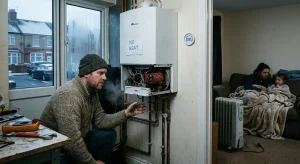
Early one January morning, a family in Luton woke up to a cold house. Their combi boiler had stopped firing overnight. Radiators were cold throughout the property, there was no hot water, and the digital display on the boiler was showing an error code the homeowner did not recognise.
They called our emergency line just after 7am. Within the first few minutes on the phone, our engineer asked the homeowner to check three things: the boiler pressure gauge, the error code on the display, and whether the property’s electricity and gas supply were both on. This quick phone triage matters because it lets us bring the right parts on the first visit instead of guessing.
Diagnosing the Fault
Our Gas Safe registered engineer arrived within the hour. On inspection, the problem turned out to be a combination of two things that often show up together in cold weather:
Low system pressure. The boiler pressure had dropped below the safe operating range, which is common in older systems during winter when pipework contracts slightly in the cold.
A frozen condensate pipe. This is one of the most common causes of winter boiler breakdowns in the UK. The condensate pipe carries waste water away from the boiler, and if it runs externally without enough insulation, it can freeze solid overnight, causing the boiler to lock out as a safety measure.
This pairing is worth knowing because a lot of homeowners assume a boiler lockout means the whole unit needs replacing. In most cases, it does not.
How the Heating Was Restored the Same Day
Once the fault was confirmed, the fix followed a clear sequence:
- The frozen section of the condensate pipe was carefully thawed using warm water, never boiling water, since sudden heat can crack the pipe.
- The boiler was reset and the system pressure was topped up to the manufacturer’s recommended level.
- The full central heating system was bled to clear trapped air from the radiators, which had been contributing to uneven heating even before the breakdown.
- The condensate pipe was then reinsulated with proper pipe lagging to stop the same fault happening again on the next cold night.
Heating was fully restored to the property within the same visit, and the family had warm radiators and hot water again by early afternoon, on the same day they first reported the fault.
Why Same Day Response Matters in Winter
A same day boiler repair is not just about comfort. In UK winters, a heating outage that drags on for two or three days can lead to frozen pipes elsewhere in the property, which turns a boiler repair into a much more expensive plumbing emergency. Responding quickly limits the problem to the boiler itself and protects the rest of the home’s plumbing from the cold.
It also matters for vulnerable residents. The NHS and Age UK both highlight that homes below 18°C carry real health risks for older people and young children, which is part of why boiler callouts are treated as genuine emergencies rather than routine maintenance during winter months.
How to Prevent This Happening in Your Home
A few simple steps reduce the chance of a winter boiler breakdown significantly:
Book an annual boiler service before the cold weather sets in, ideally in early autumn. This catches worn parts before they fail. Ask your engineer to check and insulate any external condensate pipework, since this single fix prevents one of the most common winter callouts. Keep your heating on a low, steady setting overnight during cold snaps rather than switching it off completely, since a boiler working gently overnight is less likely to seize up from sudden cold. Know your boiler’s pressure gauge and check it monthly, so you can spot a slow pressure drop before it causes a lockout.
Frequently Asked Questions
Why do boilers break down more in winter?
Boilers run for longer hours in winter and often have external pipework, like condensate pipes, that can freeze in low temperatures. Combined with normal wear on parts like pumps and valves, this makes winter the season with the highest rate of boiler faults in the UK.
Can a frozen condensate pipe really stop a boiler working?
Yes. Most modern condensing boilers are designed to shut down automatically if the condensate pipe is blocked or frozen, since it is a built in safety feature. It is one of the most frequent causes of winter boiler lockouts.
Is same day boiler repair actually possible?
In most cases, yes, provided the fault is diagnosed correctly on the first visit. Straightforward faults like frozen pipes, low pressure, or a failed pump can usually be resolved in a single callout by a Gas Safe registered engineer with the right parts on hand.
What should I do while waiting for an emergency engineer in winter?
Keep internal doors closed to retain heat in fewer rooms, run hot taps briefly if it is safe to do so to reduce the risk of pipes freezing, and avoid attempting to thaw any external pipework yourself with anything hotter than lukewarm water.