
Winterising your pipes in Luton means insulating exposed pipework, protecting your stopcock, and keeping a minimum background heat running before the first hard frost arrives, not after.
That single habit, acting early rather than reactively, is what separates homes that sail through a Bedfordshire winter from the ones calling an emergency plumber at 2am with a flooded kitchen. Luton sits in a part of the country that gets colder faster than people expect, thanks to its position on the edge of the Chilterns and its mix of older housing stock across areas like Stopsley, Marsh Farm, Bramingham and Leagrave. A lot of that housing was built decades before modern insulation standards existed, which means pipework often runs through lofts, garages and external walls with barely any protection.
This guide walks through what actually works, based on how homes in and around LU postcodes are built, not generic advice written for a different climate.
Why Luton’s Winters Are Harder on Pipes Than People Assume
Luton doesn’t get the coldest winters in the UK, but it gets some of the most unpredictable ones. Sitting inland and slightly elevated compared to London, the town experiences sharper overnight temperature drops than its position on the map might suggest. A mild afternoon can turn into a hard frost by 9pm, and that swing is exactly what catches homeowners out.
Add to that the age of the housing stock. Streets full of Victorian and 1930s terraces still have original pipe runs tucked into unheated lofts, under suspended timber floors, or against single skin external walls. Newer developments around Century Park and Butterfield Green fare better, but even modern combi systems have vulnerable external pipework feeding outdoor taps and garden supplies.
Cold air finds every gap. Once it reaches standing water inside a pipe, ice forms, expands, and puts pressure on the pipe walls until something gives.
Insulate Every Exposed Pipe, Not Just the Obvious Ones
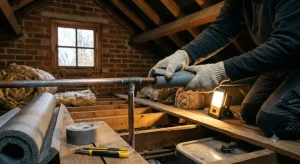
Foam lagging is cheap, sold in most DIY shops around Luton, and takes an afternoon to fit properly. The mistake most homeowners make is only insulating the pipes they can easily see and skipping the ones tucked behind tanks or running along loft floors.
Focus on these areas first.
Pipes in the loft, especially any running near the eaves where cold air gets in through soffit vents
Pipework in garages, utility rooms and under kitchen sinks against external walls
The cold water tank itself, if your home still has one in the loft
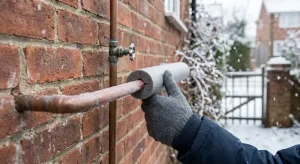
Any pipe feeding an outdoor tap
When fitting lagging, make sure joints, bends and stopcocks are covered too. These are the weak points where insulation often gets left off because the shape is awkward, yet they’re just as likely to freeze as a straight run of pipe.
Know Where Your Stopcock Is and Test It Now
Every household should know exactly where the main stopcock is before winter starts, not while water is pouring through the ceiling. In most Luton homes it sits under the kitchen sink or near the water meter close to the front of the property.
Turn it clockwise to check it moves freely. Stopcocks that haven’t been touched in years can seize up with limescale, particularly common given the hardness of water across Bedfordshire. If yours feels stiff or won’t budge, get it looked at by a plumber before the cold weather sets in rather than discovering the problem mid emergency.
Keep a Minimum Level of Heat Running
It feels counterintuitive to leave heating on in an empty house, but a consistently low background temperature is far cheaper than a burst pipe repair and the water damage that follows. Setting a thermostat to around 12 to 15 degrees Celsius, or using the frost protection setting many modern boilers include, keeps internal pipework safely above freezing without a heavy energy bill.
This matters most if you’re heading away over Christmas or New Year, a period when a huge number of burst pipe callouts happen across Luton simply because heating gets switched off entirely to save money while the house sits empty in the coldest stretch of the year.
If you’re leaving the property empty for an extended period, the safer alternative is draining the system completely: turn off the stopcock, then open every tap until the flow stops.
Protect Outdoor Taps and Garden Pipework
Outdoor taps are consistently the first thing to freeze because they sit exposed with almost no insulation from the house itself. Fit an insulated tap cover, available cheaply from most hardware shops, and disconnect any hosepipe left attached over autumn, since trapped water inside a hose can freeze back into the tap and split it.
If there’s an isolating valve for the outdoor supply, shut it off and open the tap to drain any remaining water before the first frost.
Clear Gutters and Drains Before the Rain Turns Cold
This one gets missed constantly because it doesn’t feel like a plumbing task. Leaves that build up through October and November block gutters and gullies, and once ice forms on top of that blockage, water has nowhere to go except back toward the property. In a town with as many mature trees as Luton, particularly near Wardown Park and the Hoo estate, this is a genuinely common cause of winter flooding around foundations and airbricks.
Clearing debris in autumn takes an hour and prevents a much bigger job later.
Signs Your Pipes Are Already in Trouble
A few warning signs are worth checking for regularly through the colder months.
No water coming from a tap when everything else in the house is working normally
Frost visible on the outside of a pipe
A pipe that looks slightly swollen or bulging
Damp patches or a musty smell near where pipework runs, which can mean a slow leak has already started
Catching any of these early, before a full burst, is the difference between a straightforward fix and a much larger repair bill.
What to Do the Moment a Pipe Freezes or Bursts
Turn off the water at the stopcock immediately. This stops the situation getting worse while you work out what’s happened. If a pipe has frozen but not yet burst, open the nearest tap and gently warm the pipe with a hairdryer on a low setting or warm towels, working from the tap end back toward the blockage. Never use a naked flame or blowtorch on a pipe, it’s genuinely dangerous and can cause a far worse rupture.
If the pipe has already split, or you can’t locate where the blockage is, this is the point to call a professional rather than keep working on it yourself. Water damage spreads fast, and a delay of even an hour can mean the difference between drying out a small patch of carpet and replacing a section of flooring.
When It’s Time to Call a Local Plumber
Some jobs are genuinely fine to handle yourself, fitting lagging, clearing gutters, checking a stopcock. Others aren’t. A burst pipe behind a wall, a frozen tank in the loft, or a stopcock that won’t turn are all situations where getting it wrong can turn a manageable problem into a much bigger one.
If you’re in Luton and unsure whether a pipe issue needs professional attention, it’s always worth getting an experienced local plumber to take a look before the damage spreads. Someone who knows the older housing stock across the town, and where pipework typically runs in properties built decades apart, will spot risks a generic checklist won’t catch.
Frequently Asked Questions
What temperature causes pipes to freeze?
Pipes are at risk once the surrounding air stays at or below 0 degrees Celsius for several hours, which is common overnight in Luton between December and February.
Should I leave my heating on all winter if I’m away?
Yes, a low constant setting around 12 to 15 degrees Celsius, or your boiler’s frost protection mode, is far cheaper than repairing a burst pipe and the water damage it causes.
How much does pipe lagging cost?
Foam pipe insulation is inexpensive and widely available from DIY stores in and around Luton, with a typical loft’s worth of pipework costing very little to fully wrap in an afternoon.
Can I thaw a frozen pipe myself?
Yes, using a hairdryer on low heat or warm towels, working from the tap end toward the frozen section, with the tap left open so melting water can escape. Never use an open flame.
Where is the stopcock usually located in a Luton home?
Most commonly under the kitchen sink or close to where the water meter enters the property, though older terraced houses sometimes have it in a different spot, so it’s worth checking now rather than during an emergency.
A Small Amount of Preparation Saves a Lot of Disruption
Winterising your pipes isn’t a big job when it’s spread across a weekend in autumn. Insulate what’s exposed, check the stopcock works, keep a minimum heat running, and clear the gutters before the leaves turn to sludge. Together these steps cover the overwhelming majority of what actually causes frozen and burst pipes across Luton each winter.
If you’d rather have a professional check things over, or you’re already dealing with a pipe that’s frozen or burst, ZM Plumbers can help you get ahead of it before the next cold snap.